
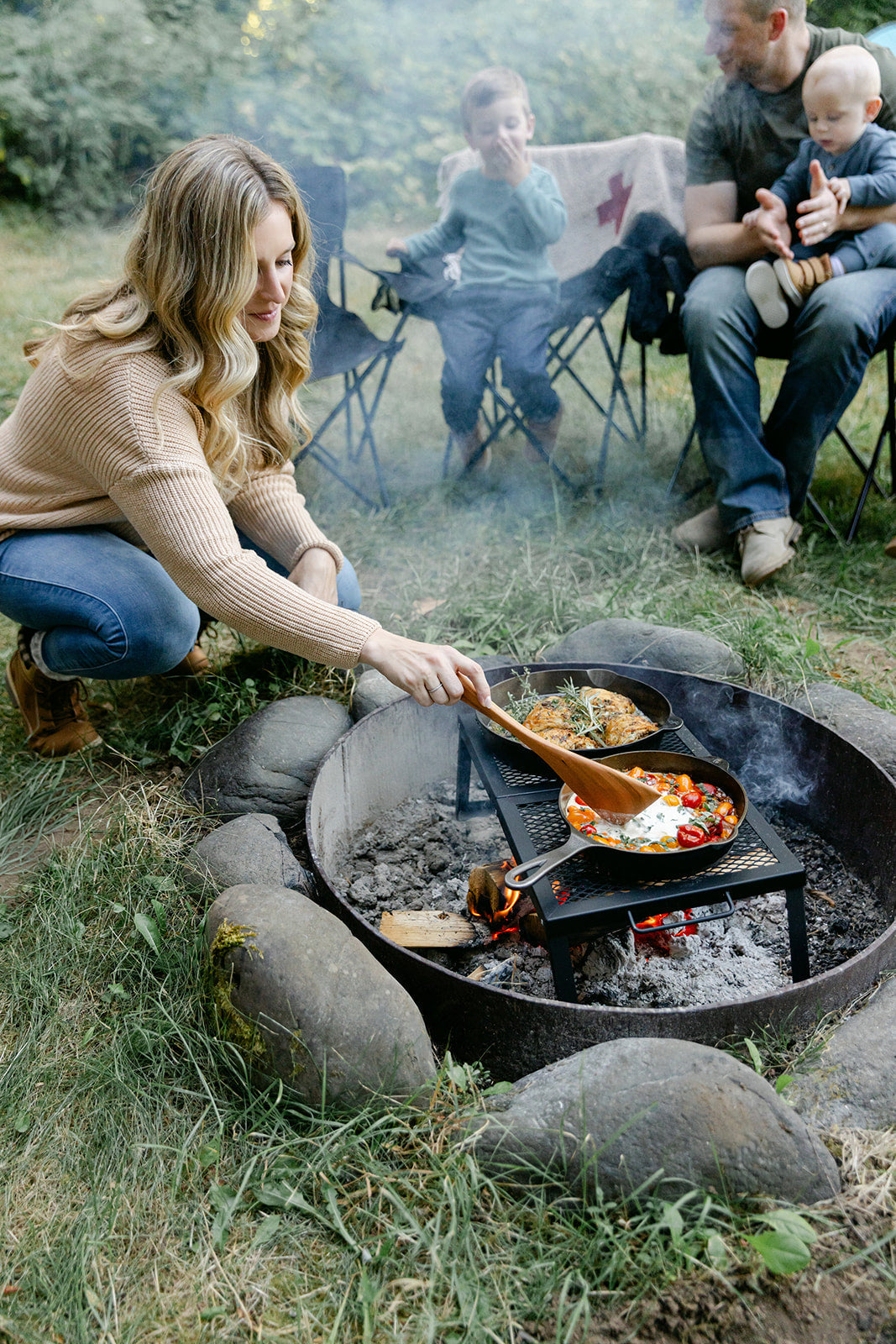
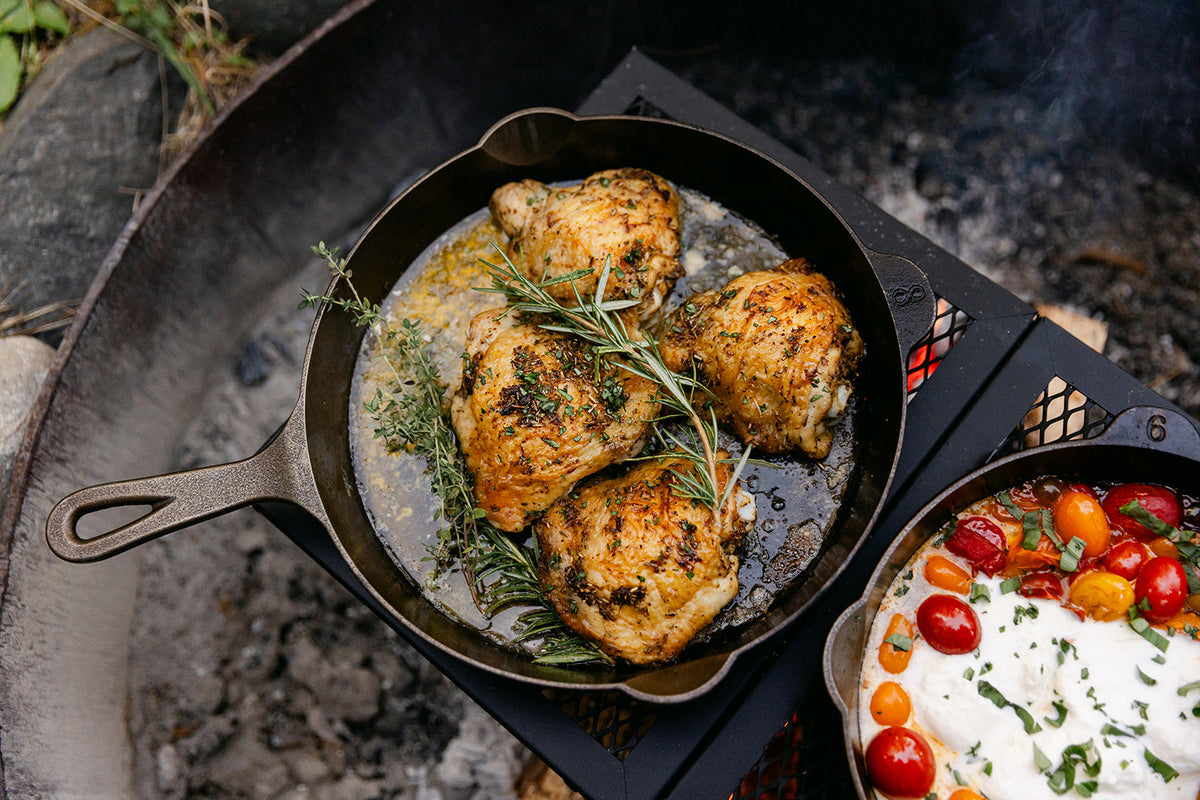
There are few pieces of cookware with the history of a cast iron skillet. A good skillet can outlive its owner, move from one kitchen to another, and continue doing exactly what it was made to do decades after it left the foundry. It might have cooked bacon over a wood stove, baked cornbread for a family gathering, seared steaks on a Sunday night, and eventually found its way into the hands of another generation. That kind of longevity is part of what makes cast iron different from almost anything else in the kitchen.
But cast iron cookware wasn't always the heavy, rough pan that many people picture today. Some of the most highly regarded American cast iron ever made was actually relatively thin, surprisingly light, and finished to a remarkably smooth surface. If you've ever picked up an old Wagner or Griswold skillet, you probably noticed it before you even looked at the markings on the bottom. They have a balance and simplicity that made them beloved by cooks long before vintage cast iron became collectible.
The story of cast iron itself goes back much further than the American kitchen. Iron casting has been around for thousands of years, with early cast iron production developing in China long before the material became widespread in Europe and North America. The basic idea was simple but incredibly useful: liquid iron could be poured into a mold, allowing manufacturers to create durable objects in shapes that would have been difficult to manufacture otherwise.
Eventually, cast iron found its way into cooking. In early American kitchens, cast iron pots, kettles, griddles, and Dutch ovens were essential tools. Cooking was often done over an open fire or in a hearth, and cast iron was particularly well suited to those job. It could withstand intense heat, hold onto that heat for a long time, and survive the kind of daily use that would have quickly destroyed less durable cookware.
As American homes changed, so did their kitchens. The spread of cast iron cooking stoves during the 19th century created a new opportunity for cookware manufacturers. Instead of cooking primarily over an open fire, families could cook on flat stove surfaces, and cookware began to evolve around that new way of preparing food. Skillets became more recognizable in their modern form, with flat bottoms, long handles, and designs intended for use directly on the stovetop.
At the same time, the United States was developing a major iron and steel manufacturing industry. Foundries began producing cookware on a much larger scale, and by the late 1800s, cast iron was becoming a fixture in American households. What had once been a relatively simple cooking vessel was becoming an area of craftsmanship and competition. Manufacturers began experimenting with the thickness of their castings, the shape of their handles, the design of their pouring spouts, and, importantly, the way the cooking surface was finished. This is where the story of American cast iron gets particularly interesting.
Two names stand out above much of the rest: Griswold and Wagner.
The Griswold Manufacturing Company began in Erie, Pennsylvania, in the 1860s. The company was founded by Matthew Griswold and his cousins and originally produced hardware rather than cookware. Over time, however, Griswold expanded into cookware and eventually became one of the most respected names in American cast iron.
Griswold skillets became known for their distinctive markings, excellent finishing, and relatively light construction. The company's famous cross logo became an identifying mark for collectors, but the appeal of Griswold cookware goes well beyond the logo.
Griswold demonstrated that cast iron did not have to be excessively thick or cumbersome to be durable and effective. The company produced pans with carefully considered proportions and smooth cooking surfaces, creating cookware that was substantial enough to retain the benefits of cast iron without feeling unnecessarily heavy.
Around the same period, another American company was developing a similar reputation in Sidney, Ohio.
The Wagner Manufacturing Company was founded in 1891 by brothers Milton and Bernard Wagner. Like Griswold, Wagner eventually became a major manufacturer of American cookware, producing cast iron as well as other types of metal cookware. The company became particularly well known for the attention it paid to finishing its products.
Wagner's approach is one of the reasons its cookware remains so interesting today. The company invested in equipment and processes that allowed its castings to be polished and finished, rather than simply leaving the surface in the rough condition associated with some modern cast iron. The resulting pans were smooth, relatively light, and refined.
There is a certain elegance to a well-made vintage skillet. The handle feels intentional, while the walls aren't unnecessarily thick. However, pan still has enough mass to do what cast iron does best.
Wagner also wasn't simply a cookware company that happened to make good pans. It was an ambitious manufacturer that experimented with different materials and products and eventually became one of the largest hollowware manufacturers in the world. The company expanded its reach far beyond Ohio, and Wagner cookware became a familiar sight in American kitchens.
For decades, Wagner and Griswold operated as competitors. Both companies developed strong reputations, and both produced cookware that has become highly desirable among collectors today. Then, in 1957, the two stories came together when Wagner acquired the Griswold cookware business.
It was an important moment in American cookware history. Two of the most recognizable names in American cast iron were now connected under the same ownership. The Griswold foundry in Erie eventually closed, and production carrying the Griswold name continued at Wagner's facilities in Sidney.
But cookware was changing. By the middle of the 20th century, American kitchens were beginning to embrace new materials and new ideas about cooking. Aluminum cookware was becoming increasingly popular because it was light and responsive to heat. Later, nonstick cookware offered something that cast iron could not: a cooking surface that promised easy cleanup with very little maintenance.
Cast iron began to lose its place as an everyday kitchen essential, and the irony is that while cast iron was disappearing from many kitchens, the cookware itself was not going anywhere. Those old Wagner and Griswold pans continued to sit in cabinets, barns, basements, and family kitchens. Some were passed down. Others were forgotten. And eventually, people began to rediscover them again.
Vintage cast iron developed a following of its own. Collectors learned to identify different logos, markings, handle designs, and pattern numbers. A skillet that someone might have considered old and outdated a few decades earlier could suddenly be worth considerably more to someone who appreciated how it was made.
But the interest wasn't about collection for most, it was about cooking. And when they did, many discovered something surprising: some of the best cast iron ever made wasn't nearly as heavy as the modern stereotype suggested.
For years, people were told that cast iron was supposed to be heavy. The heavier the skillet, the more substantial it seemed. But weight alone doesn't make a piece of cookware better. Cast iron's real advantages come from the properties of the material itself: its ability to hold heat, its durability, its versatility, and its ability to develop a seasoned cooking surface over time.
The history of Wagner and Griswold shows that there has always been another way to approach cast iron.
Make it durable, but don't make it unnecessarily heavy. Make it functional, but pay attention to how it feels in someone's hands. Give the cooking surface the attention it deserves. Build something that can be used every day, not something that needs to be treated like a museum piece.
That philosophy is a big part of what inspires Lancaster Cast Iron.
Lancaster isn't trying to recreate a vintage Griswold or Wagner skillet. There is no need to pretend that we are living in 1930. We have modern kitchens, modern stoves, modern ovens, and modern expectations. But there is plenty worth bringing forward from the way those earlier American manufacturers approached cookware.
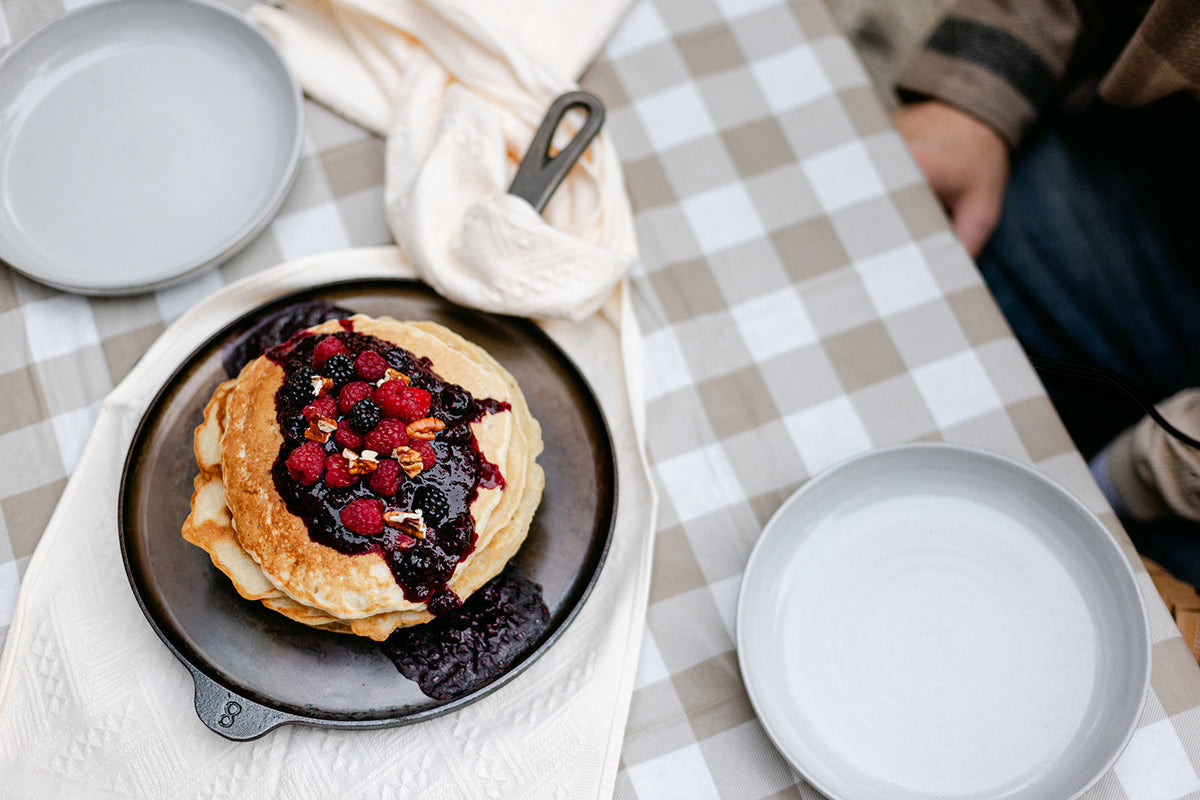
At Lancaster, that starts with weight. Our goal is to make cast iron that takes advantage of everything people love about the material without asking them to lift an unnecessarily heavy pan every time they cook dinner. Our No. 8 skillet weighs about four pounds, making it substantially easier to handle than many of the modern cast iron skillets while still giving you the heat retention and durability that make cast iron so useful.
A skillet that is easier to lift is a skillet you're more likely to use. It's easier to move from the stove to the oven. Easier to pour from, wash, or grab when you're making breakfast on a Tuesday morning.
And that, ultimately, is what makes good cookware valuable.
That's one of the things we admire about the old Wagner and Griswold pans. They were not originally made to become collector's items. They were made to be used. They were tools for everyday cooking, and their reputation came from the fact that people kept using them.
There is also something worth remembering about the idea of an heirloom. It doesn't have to be a hundred years old, It just has to be made well enough to last that long.
The skillet you buy today may not have a century of stories behind it yet. But every meal you cook in it adds something. The first breakfast, steak, loaf of cornbread. Eventually, the pan becomes part of those memories. That is the tradition Lancaster wants to be part of.
American cast iron has gone through a lot of changes. It began as a practical solution for cooking over fire, became an essential part of the American way of life, reached an incredible level of craftsmanship through companies like Griswold and Wagner, nearly disappeared as new cookware materials took over, and then found its way back into kitchens through a renewed appreciation for durable, long-lasting cooking tools.
We think the next chapter should keep the best parts of all of those eras. Cast iron should be durable, should perform, should be made with care, and it shouldn't have to weigh a ton to be good.
Lancaster is simply carrying that idea forward.
Because the best cast iron isn't the pan that looks impressive sitting on a shelf. It's the one you reach for every day. And, if we've done our job right, the one someone else will reach for long after you're done cooking with it.
Share:
How to Build the Perfect Holiday Charcuterie Board: A Simple Guide to Cheese, Meats, Fillers & Festive Additions