
There is a reason people still look for vintage cast iron.
Walk through an antique store or browse a stack of old skillets at a flea market and you’ll quickly notice that some pans just feel different. They’re often lighter than the cast iron most people are used to. The cooking surface can be remarkably smooth. The handles feel considered. The proportions seem simple because, in many ways, they are.
These were pans made for cooking every day, and the best of them have lasted long enough to become something more.
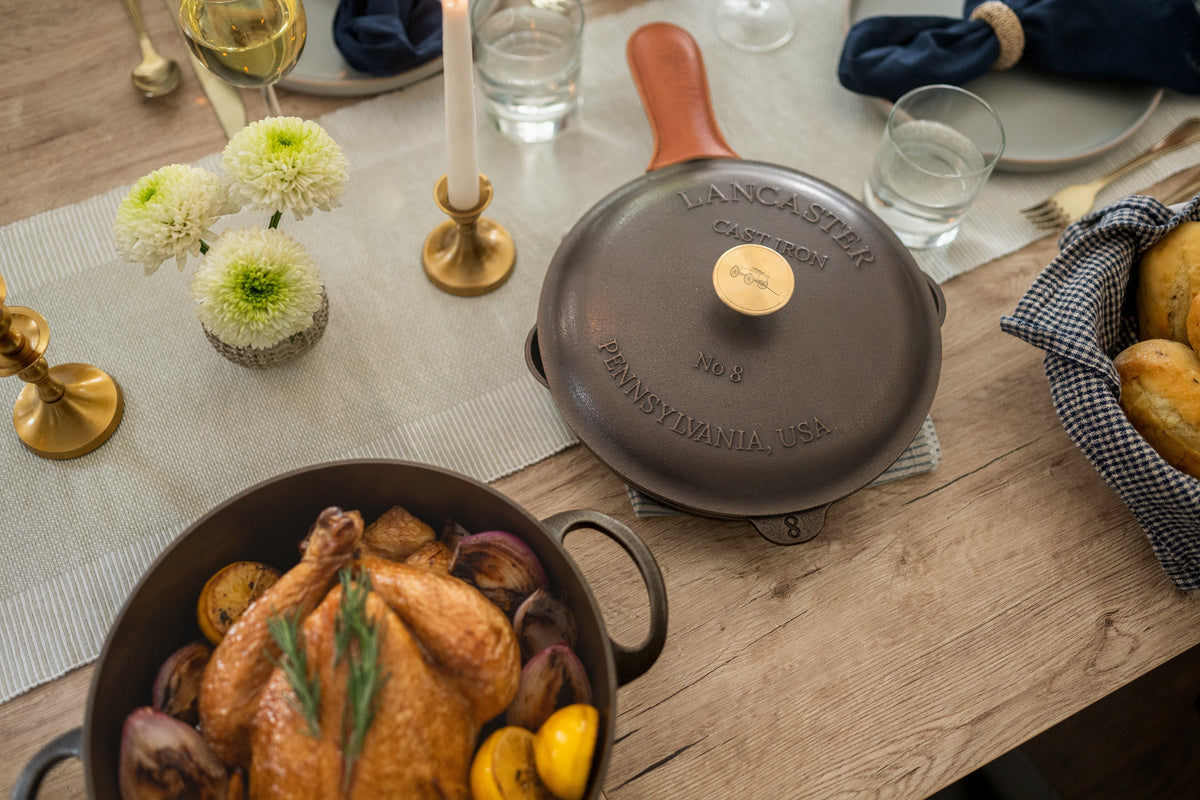
The Lancaster skillet was designed with many of the same qualities that made vintage American cast iron so sought after in the first place. A smooth cooking surface. A lighter, more comfortable body. The traditional stout handle. Large pour spouts. A helper handle. Even the sizing system comes from the way American cast iron was traditionally made and used, with numbers that trace back to the openings on antique wood-burning stoves.
For a long time, some of the most prized American cast iron skillets were made to be lighter and smoother than the pans most people associate with cast iron today. Vintage Griswold skillets, in particular, became known for that combination of light weight and smooth finish. They were still cast iron. They still held heat. They could still go from the stovetop to the oven. But they were easier to handle and more refined in the way they felt in the kitchen.
That is a big part of what we wanted to bring back.
The Lancaster No. 8, for example, weighs about four pounds. It is machined smooth and pre-seasoned by hand, giving it the kind of cooking surface that many people search for when they are looking for vintage cast iron. But the goal was never to make a replica of an old pan. It was to take the aspects that made those pans so good and build them into something made for today's kitchens.
A vintage skillet has a history before it reaches you. Maybe it cooked meals for a family you will never know. Maybe it spent decades on a stovetop or over a fire. Maybe someone found it in a box at an estate sale and brought it back to life.
There is something special about that.
But an heirloom does not have to be old when you buy it.
That is something we think about often at Lancaster. The pan that eventually becomes the one your children remember does not have to begin its life in your grandmother's kitchen. It can begin with you.
It can be the skillet you use to make breakfast on a Saturday morning. The one that stays on the stovetop because it is the first pan you reach for. The one that goes camping, cooks dinner for friends, or makes the meal that becomes part of a family story.
That is how cookware becomes an heirloom. Not because it is old, but because it is used.
There was a time when American manufacturers made cast iron cookware with a level of attention to weight, finish, and everyday usability that has become difficult to find. Those pans are still being used today because they were made to last. Lancaster is, in many ways, a continuation of that idea.
We took inspiration from the pans that came before us, but we also had the opportunity to make changes for the way people cook now. We wanted a skillet that could hold onto the heat people love about cast iron without requiring the weight that has traditionally come with it. We wanted a smooth surface that was ready to cook on from the beginning. We wanted the familiar shapes and details that made old American skillets so recognizable, while making a pan that felt natural to pick up and use every day.
Make the pan well. Make it useful. Make it something that can improve with time instead of being replaced by the next thing.
The seasoning will change. The surface will become more familiar. The pan will pick up the marks of the meals cooked in it. Eventually, it will become less about the person who made it and more about the people who used it.
That is what happened with the vintage skillets people treasure today.
And that is what we hope happens with Lancaster.
We don't think the best days of American cast iron are behind us. We think the old pans showed us what was possible. Lancaster is our way of carrying that standard forward.
The vintage skillets people love today were once new.
The next generation of heirloom cast iron is being made today.
Share:
Best Cast Iron Appetizers to Share This Season
Lancaster Cast Iron Named Epicurious’ Best Cast-Iron Skillet