


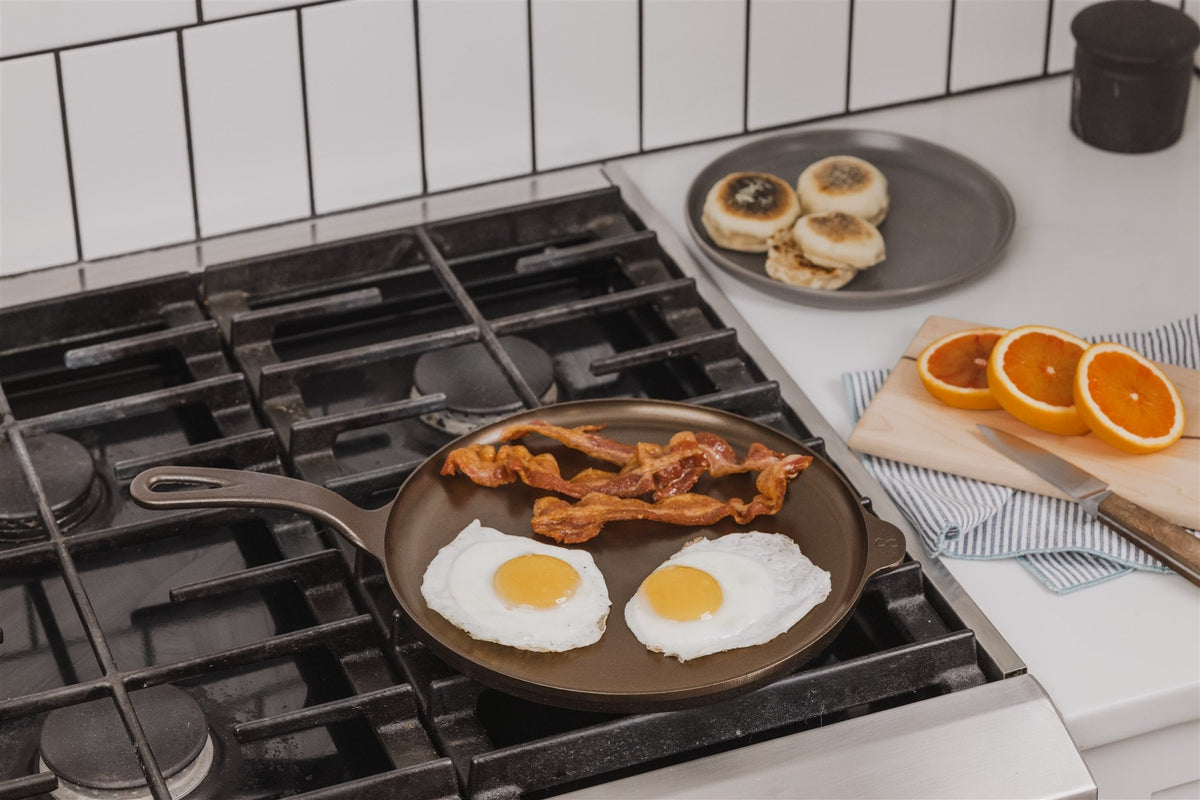
If you've ever cracked an egg into your cast iron skillet only to have it cling to the pan, you're not alone. It's probably the most common question we hear from people who are new to cooking with cast iron.
The first instinct is usually to think something is wrong with the pan. In reality, it's almost always one of a few simple things, and the good news is they're all easy to fix.
After years of cooking on cast iron, we've found that these three tips make the biggest difference.
Give the Pan a Few Minutes
Cast iron isn't a pan you rush.
One of the biggest habits people bring over from lightweight cookware is turning the burner on and immediately adding food. Cast iron likes a little patience.
Set your skillet over medium-low heat and let it warm up for three to five minutes. Then add your butter or oil. If it melts easily and coats the surface without smoking, you're ready to cook.
It may seem like a small step, but it's probably the easiest way to keep eggs from sticking.
Lower Heat Is Usually Better
This surprises a lot of people.
Because cast iron holds heat so well, you don't need to crank the burner. In fact, high heat often works against you.
Eggs are delicate. When the pan gets too hot, the proteins grab onto the cooking surface before the butter has a chance to create that slick layer you're looking for.
Try cooking over medium-low heat instead. The eggs cook more evenly, they're easier to flip, and breakfast becomes a lot less frustrating.
Once you get used to it, you'll probably find yourself cooking almost everything a little lower than you used to.
Your Pan Gets Better Every Time You Cook
One of our favorite things about cast iron is that it isn't a product that wears out. It actually improves with use.
Every meal leaves behind tiny layers of seasoning that slowly build a better cooking surface. You don't have to obsess over it. Just keep cooking.
Some of the best foods for building seasoning naturally are bacon, grilled cheese, caramelized onions, roasted vegetables, and cornbread. They all help your skillet develop the smooth, easy-release surface that people love.
If your pan is fairly new, don't judge it after one breakfast. Give it a little time. It rewards regular use.
A Couple More Tricks
Don't skimp on the butter or oil. You don't need a pool of it, but a light coating goes a long way.
And once your eggs hit the pan, resist the urge to move them right away. Let them cook for a minute or two. As they set, they'll naturally release from the surface, making them much easier to flip.
The Bottom Line
Cooking eggs in cast iron shouldn't feel intimidating. Most of the time, a little patience is all it takes.
Preheat the pan. Keep the heat lower than you think you need. Cook with it often.
Before long, you'll understand why so many people swear by cast iron for breakfast. There's something incredibly satisfying about watching an egg slide across a skillet that's been cooked on hundreds of times before and will be cooked on hundreds more.
Share:
Cast Iron vs Stainless Steel: Which Cookware Is Better?
Heavy vs. Lightweight Cast Iron: Does Weight Really Matter?